
Sunday, July 31, 2011
Vivaldi's Cello: Yo-Yo Ma, Ton Koopman, the Amsterdam Baroque Orchestra and Spotify


Friday, July 22, 2011
The Jazz Gallery presents: Steve Coleman and Five Elements
The Jazz Gallery, a cozy, mysterious music venue nestled between New York's famous Soho and its outskirts at 290 Hudson Street, hosted a performance the previous two nights featuring Steve Coleman and Five Elements. As their name, Steve Coleman and Five Elements, suggests, Steve Coleman lead the ensemble and his five elements (Jen Shyu, vocals; Johnathan Finlayson, trumpet; Marcus Gilmore, drums; Miles Okazaki, guitar; and David Virelles, piano and keyboard synthesizer) supported him by coloring Coleman's compositions with their distinct musical voices and sounds.
Upon entering the Gallery, one is greeted by a set of aged, wooden steps. If you look closely enough, each step's varnish is worn away where, over time, the footprints of the many people traversing its steep climb has exposed the woods' grains leaving only worn, white spots. These weathered spots serve as a reminder that, after all, the role of the jazz musician is a role that depicts honesty and self-identity. Because the wood's appearance is so bare with nothing left to protect it, the jazz musician, during a performance, is similar by the way his or her voice is revealed during improvisation. The slow but gradual sense of growth towards developing a voice (i.e., how one moves away and toward a piece's melody during improvisation) is like the wood: polished and exposed through the continuous progression of time and the elements which rub its varnish away.
Passing the ticket man who sits at the top of the steps, there is a room with at least ten rows of chairs and a stage which is practically on top of the audience.
Thursday, July 14, 2011

Tuesday, June 28, 2011
Rufus Wainwright, a modern savior of American opera?
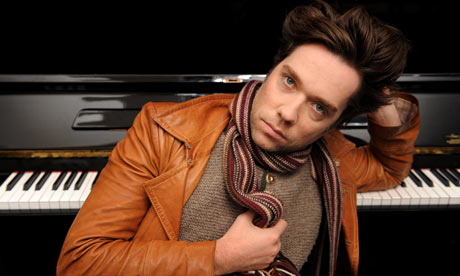

Could it be? Rufus Wainwright -- singer, songwriter, son of legendary folk singers Loudon Wainwright III and Kate McGarrigle as well as brother to Martha Wainwright and Lucy Wainwright Roche -- may be New York City Opera’s (i.e. City Opera or "the people's opera") saving grace?
For City Opera, the past two years have witnessed thorough attempts at revitalization. There was a $107 million plan to refurbish the company's home at Lincoln Center -- the David H. Koch theater -- along with faulty managing of funds, poor repertoire choices, and a dangerously low audience attendance rate. Optimal budget solutions have been proposed, agreed on, attempted at meeting, and sadly, have garnered no success. Artist management authorities, such as Gerard Mortier -- the former general director of Opéra National de Paris and director of numerous European music festivals (la Monnaie (Brussels), the Salzburg Festival, and the German Ruhr Triennale arts festival) -- have endeavored to save "the people's opera." However, even the brilliance of Mortier's budget-torial planning did not save the company from making its decision to leave Lincoln Center which was officially announced a month ago in the NY Times.
Wednesday, June 1, 2011
A Conversation with Tobias Fischer, writer and editor-in-chief of Tokafi.com

Recently, I had the rare opportunity to speak with Tobias Fischer, writer, cultural editor for Germany's upmost publication for the world of recording "Print", and editor-in-chief of Tokafi.com -- a blog that unites classical music alongside contemporary music, jazz, electronic music and the various other popular musical sub-genres. Fischer has contributed pieces for publications such as All About Jazz, Klassik.com, Earlabs, Oro Molido, and MacLife. Additionally, he regularly writes for New Zealand's art-based magazine "White Fungus" which informs readers of worldwide visual arts, comics, literature, history, political commentary, satire, and experimental music. Since my area of focus is steeped in the idea of bridging the gap between music past and present, I wanted to hear his thoughts on today's classical music scene and its affect for the world at large.
MF: How do you view the impact of contemporary music in today's classical music scene?
TF: On the one hand, I feel very strongly about the inclusion of contemporary works into the program of classical concert halls, both as an enrichment and a logical continuation of lineage from the past into the present. At the same time, the mechanism which awards 20th and 21st century composers their 15 minutes of exposure in a system otherwise dedicated to Mozart and Beethoven seems to be mostly based on a vague sense of duty and a guilty conscience rather than passion. To me, there needs to be a tangible connection between the different pieces of a concert program which extends beyond the merely intellectual: At the opening might of the Mini-Mahler series in Berlin (http://www.minimahler.com), Mahler's music was juxtaposed with pieces by the second Viennese School – a both historically intriguing and musically sound concept, which did not take any long explanations to be understood. Allowing an audience to get to know a piece of new music before they come to the hall also makes sense. Perhaps the acceptance of contemporary music in classical concert halls would be higher if audiences were to receive a CD with selected recordings of the pieces as part of their subscription prior to the events?
MF: Why did you decide to become a writer and when?
TF: Probably as a boy in first grade. I can still remember being given the time to finish a story in an otherwise empty class room, while the others pupils had long sumbitted theirs, and thinking distinctly: This is what I want to do. Grammar school and a bad internship-experience at a local newspaper put that vision out of focus for a while - which is why it took another decade for me to finally make journalism my profession. Looking back, these years may not have been in vain: I spent entire days during my college-years reading nothing but reviews and articles and building up a huge desire to write about music.
MF: What did you write for All About Jazz, and how do you think jazz as a writer?
TF: I wrote a piece on Tom Heasley and Toss Panos' „Passages“ for them and it's been a highly interesting experience. I don't think any other online magazine out there sports a similarly thorough review process and thinks as deeply about the coherency and quality of the contributions to the site. Heasley, of course, isn't, strictly speaking, a jazz-musician and my personal interests have since tended even more towards the intersection between sound art and improvisation, which is why the review may actually be the last text I'll contribute. But it has to be said that jazz writing has influenced me greatly. Bill Evans liner notes to „Kind of Blue“ or, in fact, all of the wonderful introductions to the entire Blue Note catalogue are markey by the fusion between a kind of poetic vagueness and informational quality that I strive for. In my liner notes to the albums by drone/jazz/space/avantgarde ensemble 3seconds of air (http://www.3secondsofair.com), I am paying homage to these influences.
MF: What do you find is most crucial to depict about it for your readers?
TF: Jazz oscillates between personal freedom and elements of group interaction, so one of the interesting aspects is to portrait how the two relate within a particular ensemble constellation. I also enjoy the idea that complex strucures can arise from very simple premises – documenting and commenting on that process is part of the allure of writing about it.
MF: For writing about music in general, what do you think is key to convey to the reader?
TF: The point in music journalism has long been to describe and rate compositions, but these two topics are probably farthest away from what I feel to be important. To me, music journalism should offer a glimpse at the ideas behind a work of music and at the artistic vision invested into it. Ideally, it should work both as an introduction to the material, a spark for a fruitful debate and as a source of reference to which one can return after having listened to the music to compare one's thoughts with those of the author. This - rather than providing an opinion - engages an audience from my perspective. At the same time, I feel it is also vital to not just consider the reader in this equation. Music journalism is always a three-party-relationship and should involve the musician as well.
MF: Are conservatories in Europe readily accepting of teaching contemporary music technique and theory?
TF: Having actually never studied music at consevatory, I may not be the right person to ask here, but from what I hear, they definitely are. Turkish pianist Seda Röder (http://www.sedaroeder.com/) told me how her insight into 20th century composition was decisvely changed through her university-years in Germany and how, in general, universities serve as focal points of the scene. An important aspect is that a lot of this teaching is done by people genuinely passionate about the music and imbued with a desire to take it to a wider public.
MF: How do you view Historical Performance's future?
TF: Despite its quick rise to prominence, I think the movement is really just at its beginning. Probably the biggest problem lies in actually turning it into an artistic movement at all rather than, as is often the case, a marketing fad. Historic Practise deals with questions of interpretation an when applied sensibly, it simply means searching for the most precise realisation of a composer's intentions and to scrape away the obscurring layers of dust that have amassed over the centuries. Just putting on a wig and playing on badly-sounding instruments is not a valuable contribution to the debate.
Monday, May 9, 2011
Tristan Perich
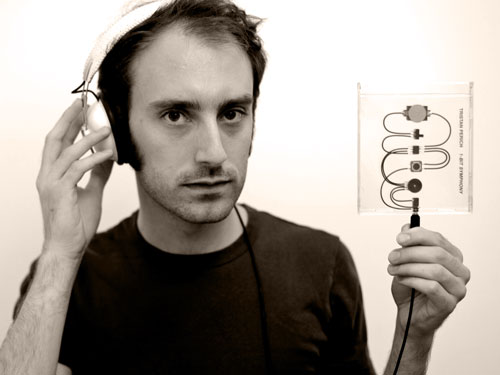
Serenity and unyielding power are nature’s most elegant and alluring facets. That is why, when mixing elements of a computer (a purely human-derived contraption) along with the natural composure of sound found in acoustic instruments, Tristan Perich receives the attention he does. Both quietly intriguing and beautiful, Perich’s work 1-Bit Music is powerful in its sophisticated design which embodies the concept of naturalness. Returning to the origin of electronic music, Perich incorporates square sound waves which interplay between electrical states 1 and 0. He applies the philosophies of mathematicians Kurt Gödel and Werner Heisenberg which revolve around the idea that if something is consistent, then it is never complete. Perich, driving this notion in 1-Bit Music, delivers a fascinating sonic display of cyclical motion. Acoustic sounds intermingle with electronic ones that, at certain moments, bring out distinct lines of pulsations and tones which transfix the listener.
Minimalist at its core, Perich’s 1-Bit Music contains its own rhythm which feels primitive, and this combined with his layering of oscillations between electronic and acoustic sounds, creates an effect where specific beeps and pulsations stick out over others. This affect is felt most powerfully in his first piece titled Observations for two sets of crotales, three-channel 1-bit music (2008). This implementation was developed by the interaction between the acoustic sounds presented in the crotales (which were played by Oberlin Conservatory students Austin Vaughn and Ryan Packard) and the electronic noises. Each voice (electronic or acoustic) stopped completely to allow each other to shine at explicit landmarks in the composition. All together, the effect was bewitching.
Consistency, drive, and the interplay between electronic and acoustic sound waves thrived throughout Perich’s presentation. Three other compositions included: Momentary Expanse for solo vibraphone with two-channel 1-bit music (2008), qsqsqsqsqqqqqqqqq for three toy pianos and three-channel 1-bit tones (2009), and Dual Synthesis for harpsichord and four-channel 1-bit electronics (2009).
Upon hearing Dual Synthesis, Perich’s ideal of circular motion, natural rhythm, and the interaction between acoustic and electronic sounds were brought to a higher level of fruition. Synthesis (the longest) was a grandiose polyphony of circular motion allowing the individual sounds of the harpsichord to be heard, which would in response, invite the four-channel 1-bit electronics to solo as well. At distinct points, harpsichord and electronics would convene in unison, and the result was mesmerizing. Portions of the circle (or circular motion) conveyed by Perich’s 1-Bit ideal were distinguishable and clever. Impressive on harpsichord, Daniel Walden was illustrated this effect tactfully and with tireless vigor.
As an event spanning over three venues (Frank Lloyd Wright’s Weltzheimer-Johnson House, SPACES Gallery in Cleveland, and Fairchild Chapel -- cancelled due to an emergency in Perich’s family), 1-Bit Music is only one counterpart of Perich’s 1-Bit Project which incorporates his visual art as well.
Beginning at the Wetzhimer-Johnson House, 1-Bit Music depicted an enchanting atmosphere which permitted the audience to be surrounded by nature and the ambience of home. It was as though listeners were experiencing a premier of Haydn or Liszt especially with the application of the harpsichord and toy pianos.
Made possible through the funding of the Oberlin Creativity Fund and the Meet The Composer’s Metlife Creative Connections Program, the 1-Bit Project is, hopefully, a beginning towards bridging the gap between musicians and visual artists at Oberlin.
We are who we are.

Communication believes in every type of medium. The charm of colors, lines, shapes, and shading are what comprises visual art. Dynamics, timber, register, and rhythm define music. Writing involves argumentation, voice, assonance, alliteration, and appropriate adjectives. The point to all of this is, after discussing with a friend the impact of our thought processes on music and writing which are developed by our daily life interactions, I found that, as musicians, visual artists, and writers, what lies at the basis of our work is the ability to masterfully translate and communicate life. We live it, see it through a specific lens, and try to make sense for other human beings the chaotic nature of everyday situations. In this vein, we somehow make life easier by presenting it more comprehensively than it seems, and as musicians, artists, and writers, we serve a role that is similar to a minister, priest, rabbi, or guru.
That is why (if you are interested) you should all take a look into the Mysticism of Music, Sound, and Word by Hazrat Inayat Khan. It is a beautiful representation of a musician's take on his own art and how it is a portal into the realities of life, love, and happiness.
For instance, take Khan's beginning to Part 1 of his book. Here, Khan creates parallels between the idea of "creation" in the universe which is found in music. Illustrating and comparing the original elements -- "earth, air, water, and fire" -- to specific sounds and colors, he creates a world that is viable through the power of music and sound.
Here, is what Khan says:
"The sound of fire is high pitched, its form is curled, and its color is red. It is heard in the falling of the thunderbolt and in a volcanic eruption, in the sound of a fire when blazing, in the noise of squibs, crackers, rifles, guns and cannons. All these have a tendency to produce fear.
The sound of air is wavering, its form zigzag, and its color blue. Its voice is heard in storms, when the wind blows, and in the whisper of the morning breeze. Its effect is breaking, sweeping and piercing. The sound of air finds expression in all wind instruments made of wood, brass and bamboo; it has a tendency to kindle the fire of the heart, as Rumi writes in his Masnavi about the flute. Krishna is always portrayed in Indian art with a flute. The air sound overpowers all other sounds, for it is living, and in every aspect its influence produces ecstasy."
During Part III, Khan offers the question -- what is the "meaning" of "words," and why are they important?
"Then there is another question, namely: what makes a word powerful? Is it the meaning, the vibration, the way it is used, or the knowledge of the teacher who teaches the pupil to repeat it? The answer to such a question is that some words have power because of their meaning, others because of the vibration they produce, others for their influence upon the various centers. And there are some words given by saints, sages and prophets which have come inspirationally from God. In them is all blessing and the mystery of how to acquire all that the soul desires in life. If there exists any phenomenon or miracle it is in the power of words. But those who know of this power and who possess it never show it to others. Spiritual attainment is not a thing to be brought before people to prove that it is real, or as a show."
If you are reading this and thinking, "Wow, never before have words been so inspirational. Everything makes sense!" (Or, in other cases, it may confuse you. Hey, but that's ok. Khan just wants you to think, and therefore, grow.) In my case, I could not stop reading what he has to say.
None-the-less, The Mysticism of Sound and Music is resplendent in its humbleness, power, and delivery. You (musicians, writers, artists) will find even more importance in what-you-do.
Subscribe to:
Posts (Atom)